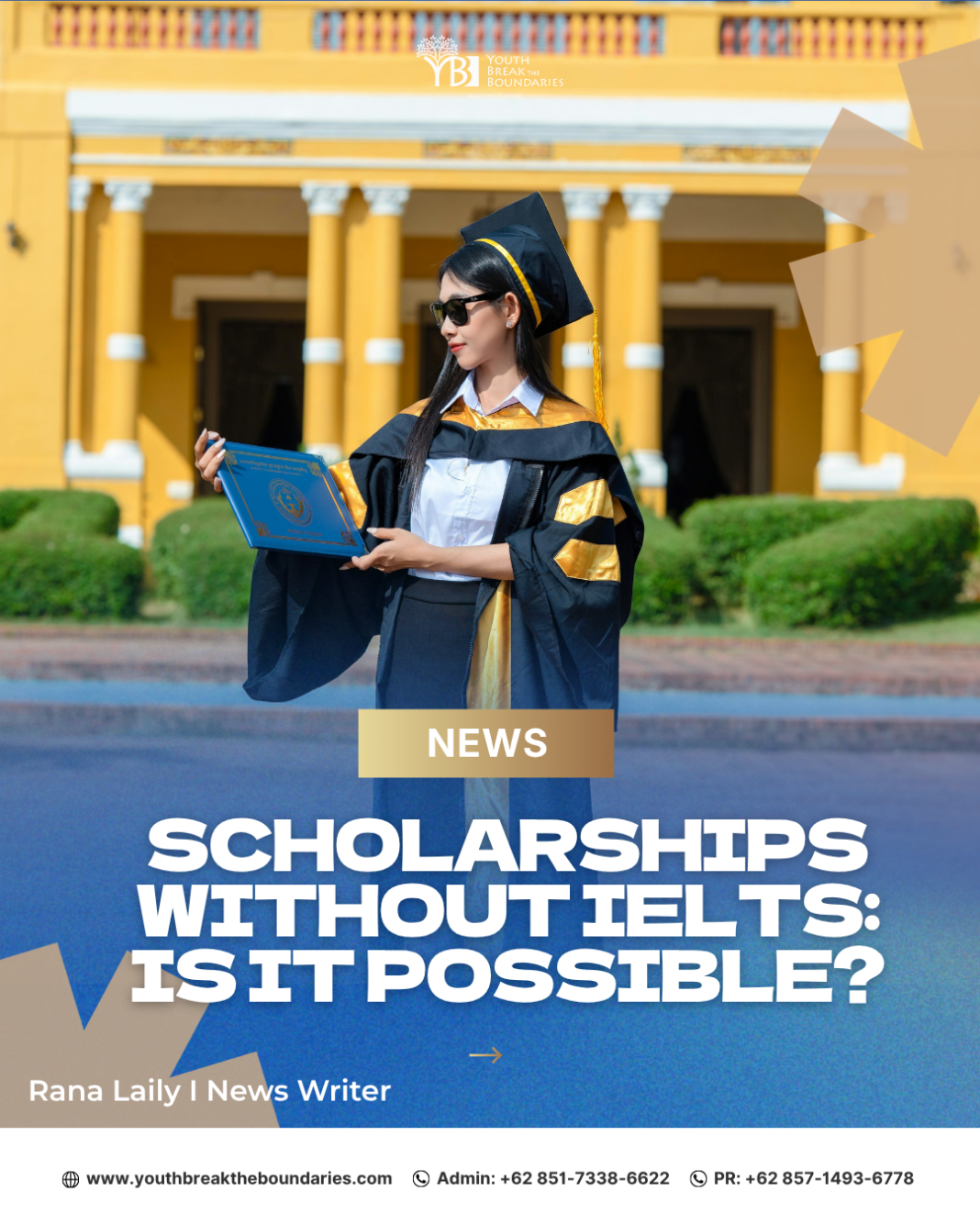

YBB – Many students believe that studying abroad always requires an IELTS score. However, this assumption is not always correct. In fact, several international scholarships allow applicants to apply without IELTS. Therefore, students still have opportunities to study overseas even if they have not taken an English proficiency test.
Moreover, universities and scholarship providers now offer alternative ways to assess language ability. As a result, the application process has become more flexible and inclusive for international students.
According to the British Council, English proficiency can be demonstrated through various methods, including prior education in English or alternative tests (British Council, https://www.britishcouncil.org).
Why Some Scholarships Do Not Require IELTS
Scholarship providers understand that IELTS tests can be expensive and not always accessible. Therefore, many programs accept alternative proof of English proficiency.
In addition, globalization has encouraged universities to attract more diverse applicants. Consequently, institutions now focus on accessibility and inclusivity in their admission processes.
UNESCO highlights that reducing barriers to education remains a global priority to ensure equal access for students worldwide (UNESCO, https://www.unesco.org).
Alternative Requirements Instead of IELTS
If IELTS is not required, applicants must usually provide other forms of proof. These alternatives help universities assess whether students can succeed academically.
1. Medium of Instruction (MOI) Letter
Many universities accept a Medium of Instruction letter. This document confirms that your previous education was conducted in English.
As a result, applicants who studied in English-speaking environments can bypass IELTS requirements. Several universities across Europe and Asia accept this document as valid proof.
Guidelines for MOI acceptance appear in university admission policies, as explained by DAAD (DAAD, https://www.daad.de).
2. Online Interviews
Some scholarship programs conduct interviews to evaluate English communication skills. During these interviews, applicants must demonstrate fluency and clarity.
Therefore, strong speaking skills can replace standardized test scores in certain cases.
3. Alternative English Tests
Some institutions accept other tests such as TOEFL, Duolingo English Test, or internal language assessments. These options often provide more flexibility for applicants.
According to ETS, institutions worldwide increasingly recognize multiple forms of English assessment (ETS, https://www.ets.org).
Popular Scholarships That May Not Require IELTS
Several well-known scholarship programs offer flexibility regarding English requirements, depending on the applicant’s background.
1. Erasmus+
Some Erasmus+ programs allow applicants to submit alternative proof of English proficiency instead of IELTS. Requirements may vary depending on the university and program.
The European Commission explains that Erasmus+ promotes accessibility and participation from diverse student backgrounds (https://ec.europa.eu).
2. Türkiye Scholarships
Türkiye Scholarships often accept alternative English proof or conduct interviews instead of requiring IELTS scores.
This program aims to attract international students from various countries and educational backgrounds.
Official details are available through the Türkiye Scholarships (https://www.turkiyeburslari.gov.tr).
3. Some University-Specific Scholarships
Many universities in countries such as Germany, Malaysia, and Italy offer scholarships without strict IELTS requirements. Instead, they evaluate academic background and communication skills.
Therefore, researching each university’s policy is essential before applying.
Also read : Countries Offering Free Relocation Programs for International Talent
Tips to Apply for Scholarships Without IELTS
First, check the specific requirements of each program. Since policies differ, you need to confirm whether alternatives are accepted.
Next, prepare a strong motivation letter. This document allows you to explain your academic goals and demonstrate your readiness.
In addition, improve your English communication skills. Even if IELTS is not required, interviews or academic activities will still require strong language ability.
Finally, gather supporting documents early. Preparation increases your chances of success.
Conclusion
Scholarships without IELTS provide valuable opportunities for students who want to study abroad. Many programs now accept alternative proof of English proficiency, such as MOI letters, interviews, or other tests. Therefore, students should not feel limited by the absence of an IELTS score.
With proper preparation and research, you can find suitable scholarships and pursue international education successfully.