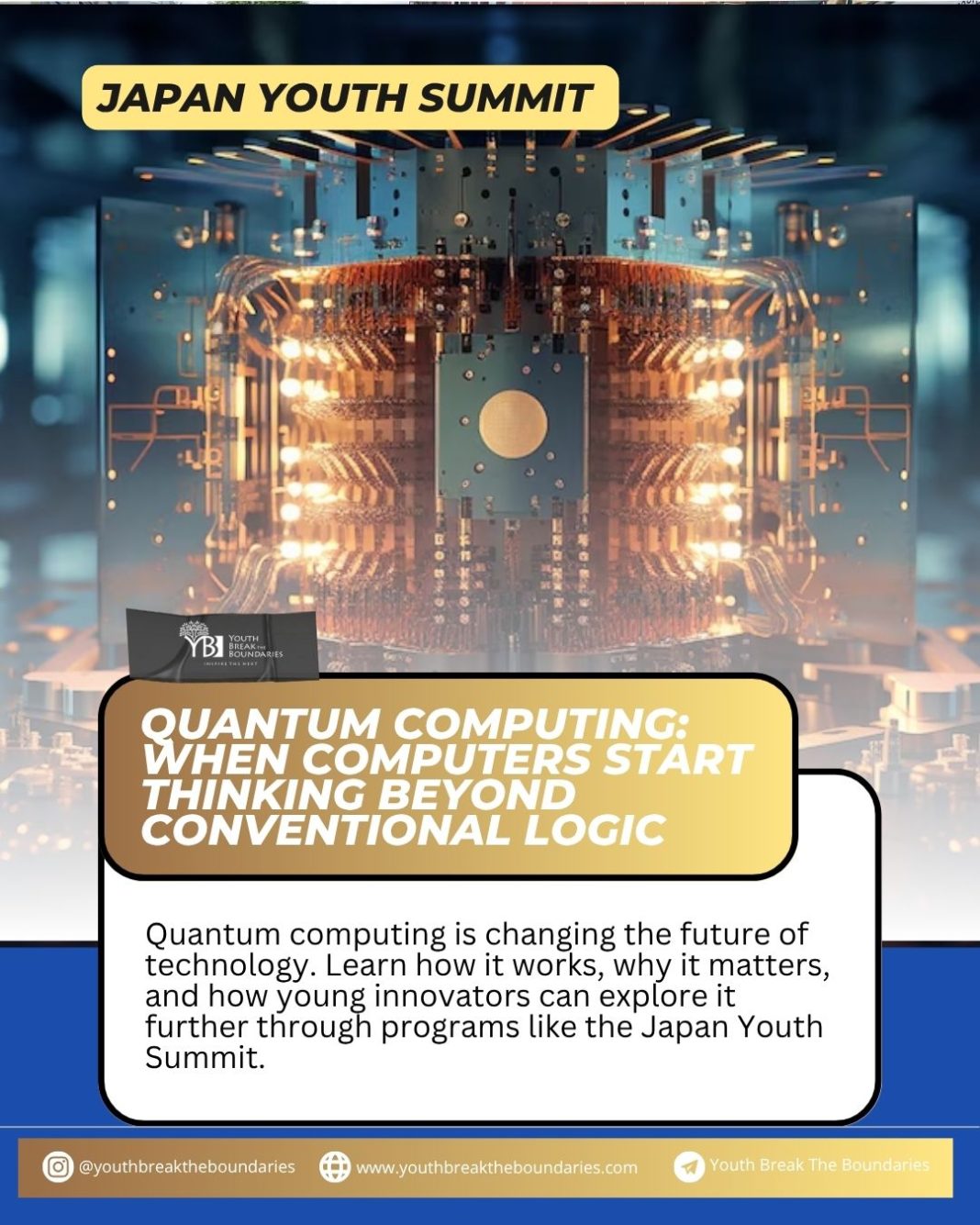

Quantum computing is no longer just a sci-fi concept. It is now revolutionizing the way we understand computation, information, and innovation. Compared to the classical computers you’re familiar with today, quantum computers operate on completely different principles—thinking in parallel, not linear.
In an increasingly complex world, the demand for processing massive amounts of data quickly continues to grow. Quantum computing emerges as a solution to that challenge.
What Is Quantum Computing?
Quantum computing is a type of computation that uses the principles of quantum mechanics, such as superposition and entanglement. Unlike classical computers that use bits (0 or 1), quantum computers use qubits, which can be in a state of 0, 1, or both simultaneously.
This allows quantum computers to perform thousands of calculations at once, making them extremely efficient for solving complex problems like molecular simulations, logistics optimization, and data encryption.
Also Read: Limited Budget, Smart Ideas: Funding Strategies for Small-Scale Social Projects
Classical vs Quantum Computers
Classical computers process information deterministically—one operation at a time. In contrast, quantum computers work probabilistically. For example, when solving a complex mathematical algorithm, a quantum computer can explore multiple possibilities simultaneously and return faster results.
Because of this capability, quantum computing is expected to transform critical sectors such as healthcare, cybersecurity, finance, and even climate science.
Challenges in Quantum Development
Despite its promise, quantum computing still faces many technical hurdles. One major issue is the instability of qubits, which are highly sensitive to environmental changes. Even minor interference can disrupt computation.
Furthermore, building quantum computers is expensive. Only major institutions like Google, IBM, and select universities currently have full access to the technology.
However, as research advances and public-private support grows, experts believe that within the next few years, quantum computers will become more stable and widely accessible.
Also Read: Jarang Dilirik, Ternyata 4 Kampus Luar Negeri Ini Gratiskan Kuliah untuk WNI!
Global Impact Potential
If this technology is successfully deployed, it could accelerate drug discovery, optimize global transportation networks, solve previously unsolvable mathematical problems, and even challenge the digital encryption systems we use today.
That’s why as part of the youth generation, you need to begin understanding this technology and how it will change how we work, learn, and interact.
Conclusion
Quantum computing is not just a technological leap—it’s a new paradigm for understanding and solving complex problems. Learning about it early on can position you to be part of a generation that is not only adaptive but also innovative in navigating the future.
If you’re eager to learn more about quantum computing and other cutting-edge innovations, don’t miss the Japan Youth Summit by Youth Break the Boundaries. This global forum will explore the latest in technology and innovation.