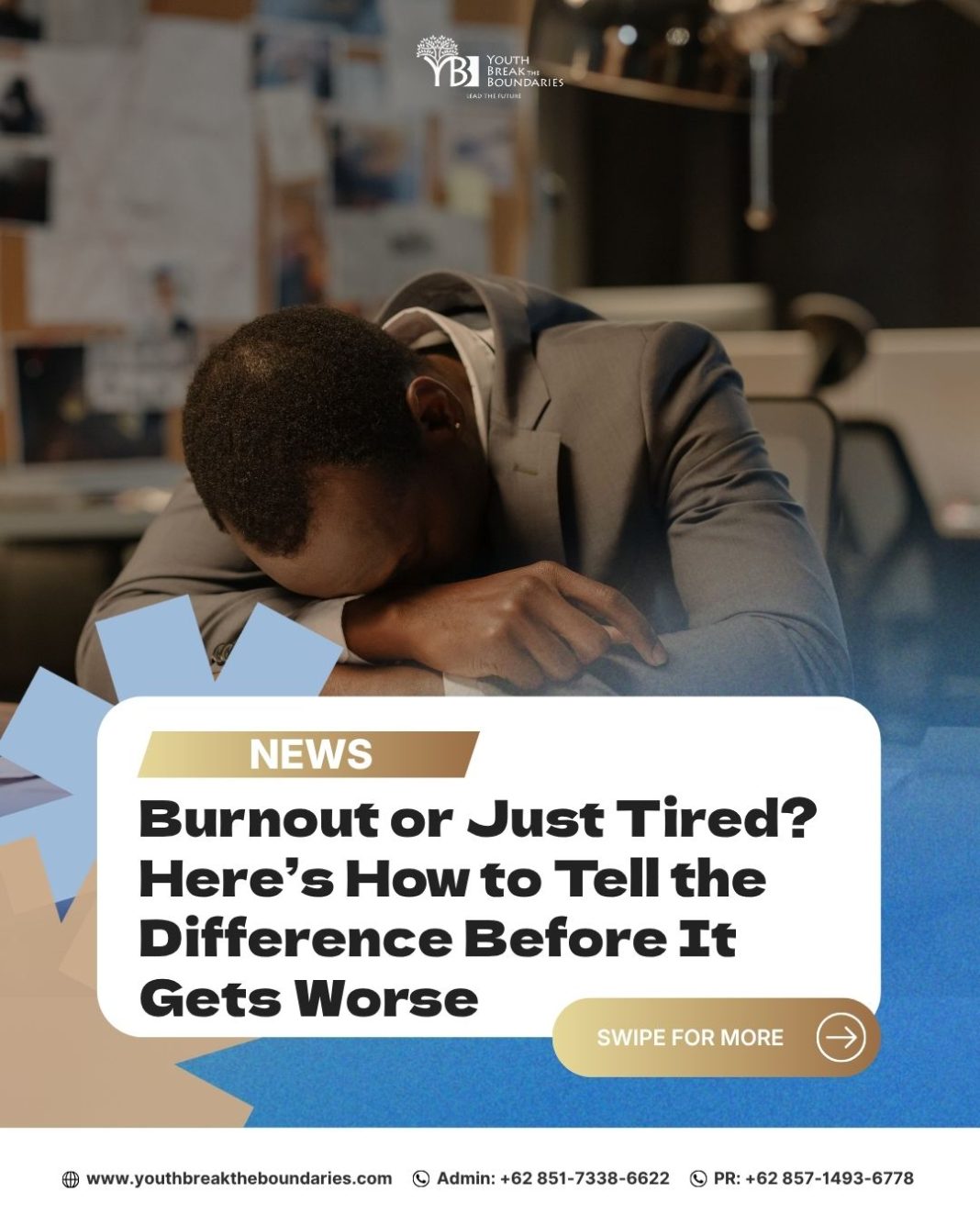

YBB — In a world that constantly celebrates productivity, feeling tired has almost become a normal part of everyday life. Long deadlines, packed schedules, endless notifications, and pressure to always “keep going” can leave many people physically and mentally drained. But sometimes, what feels like ordinary exhaustion may actually be something deeper ‘burnout’.
The problem is that burnout often arrives quietly. At first, it may only feel like a lack of motivation or difficulty focusing. Over time, however, it can affect emotional well-being, physical health, relationships, and overall quality of life. Understanding the difference between normal fatigue and burnout is important so you can recognize the warning signs early and take care of yourself before reaching a breaking point.
What Is Normal Fatigue?
Feeling tired after a busy day is completely natural. Your body and mind use energy throughout the day, especially when you’re handling demanding tasks, studying for exams, working overtime, or dealing with emotional stress.
Usually, regular fatigue improves after proper rest. A good night’s sleep, a relaxing weekend, or taking a short break can help restore your energy. Even though you may feel exhausted temporarily, you still have motivation to continue your activities once you recover.
Normal tiredness is your body’s way of asking for rest not a sign that something is seriously wrong.
Also read: Mastering Time Management: A Complete Guide to Boost Productivity and Balance Your Life
What Is Burnout?
Burnout is much more than simply being tired. It is a state of emotional, physical, and mental exhaustion caused by prolonged and unmanaged stress. Unlike ordinary fatigue, burnout does not disappear after sleeping or taking a day off.
People experiencing burnout often feel emotionally detached from their work or daily activities. Things they once enjoyed may suddenly feel meaningless. Motivation decreases, concentration becomes harder, and even small responsibilities can feel overwhelming.
Burnout can slowly make someone feel trapped in an exhausting cycle where rest no longer feels enough.
Signs You May Be Experiencing Burnout
One of the biggest differences between burnout and regular tiredness is the emotional impact. Burnout affects not only your energy but also the way you think, feel, and respond to daily life.
Some common signs include:
Constant Exhaustion
You feel drained almost every day, even after getting enough sleep. Your body feels heavy, and simple tasks require more effort than usual.
Losing Motivation
Activities that once felt exciting now feel exhausting or meaningless. You may struggle to find enthusiasm, even for hobbies or goals you previously enjoyed.
Increased Irritability
Small problems suddenly feel unbearable. You become more sensitive, impatient, or emotionally reactive without fully understanding why.
Difficulty Concentrating
Burnout can affect focus and productivity. You may forget things easily, make more mistakes, or feel mentally “foggy” throughout the day.
Emotional Detachment
Many people with burnout begin withdrawing socially. Conversations feel tiring, and spending time with others may feel emotionally overwhelming.
Feeling Hopeless or Unappreciated
You may begin questioning whether your efforts matter at all. Over time, this can lead to self-doubt and emotional numbness.
Why Burnout Happens
Burnout doesn’t appear overnight. It develops gradually when stress continues without proper recovery. Several factors can contribute to burnout, including:
- Excessive workload
- Lack of boundaries between work and personal life
- Pressure to always perform perfectly
- Poor work-life balance
- Constant multitasking
- Emotional stress that remains unresolved
- Lack of support from the surrounding environment
Many people ignore early signs because they believe being constantly exhausted is “normal.” Unfortunately, untreated burnout can eventually affect both mental and physical health.
Also read: Mengapa Self-Awareness Penting untuk Meningkatkan Kualitas Diri
Small Ways to Recover Without Completely Stopping Your Life
Recovering from burnout does not always require quitting your job or disappearing from responsibilities completely. Sometimes, small and consistent changes can help restore balance little by little.
Start by creating healthier boundaries. Avoid checking work messages late at night and allow yourself to fully disconnect during breaks.
Prioritizing rest is equally important. Sleep, hydration, nutritious meals, and movement may sound basic, but they play a huge role in restoring emotional energy.
Short breaks throughout the day can also help reset your mind. Even stepping away from your screen for a few minutes, stretching, or taking deep breaths can reduce mental overload.
Most importantly, stop treating rest as a reward that must be earned. Rest is a necessity, not laziness.
Asking for Help Is Not Weakness
Many people try to handle burnout alone because they feel guilty for struggling. In reality, talking to someone you trust can make a huge difference. Whether it’s a friend, family member, coworker, or mental health professional, support helps remind you that you are not carrying everything by yourself.
Recognizing burnout early is not a sign of failure, it is a sign of self-awareness.
Learning to Listen to Yourself
Modern life often pushes people to move faster, work harder, and stay productive at all times. But constantly ignoring exhaustion can eventually lead to deeper emotional and physical consequences.
There is a difference between being tired after a productive day and feeling emotionally empty for weeks at a time. Understanding that difference matters.
Your body and mind are always sending signals. Learning to listen before things become overwhelming may be one of the healthiest habits you can build.