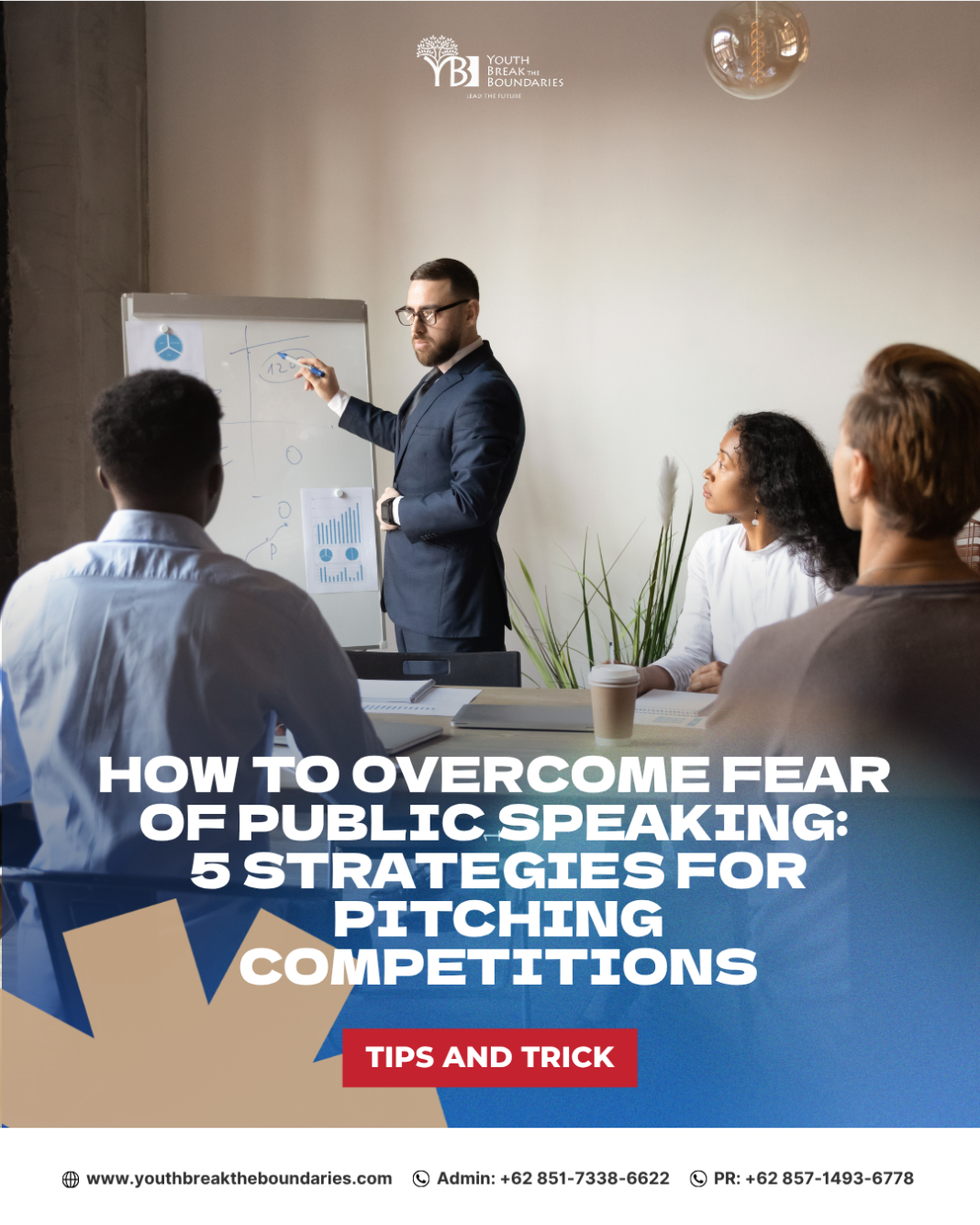

YBB – Public speaking is one of the most common fears in the world. For many students and young professionals, this fear becomes a major obstacle, especially in situations such as pitching competitions, presentations, and academic forums.
The physical reactions are familiar. A racing heart, sweaty hands, and the fear of being judged often appear at the same time. However, the real issue is not the fear itself, but how individuals respond to it.
Why Fear of Public Speaking Holds You Back
Fear of public speaking can limit opportunities in many ways.
Many people choose to avoid speaking in front of others. As a result, they lose confidence in their ideas and miss valuable opportunities to stand out. In competitive environments such as pitching competitions, this hesitation can directly affect performance and outcomes.
Understanding this is important. Fear is natural, but avoiding it can prevent growth.
The Key Insight: Fear Can Be Managed
Fear does not need to disappear for someone to perform well.
Successful speakers are not those who feel no fear, but those who are able to manage it effectively. They shift their focus from worrying about failure to delivering their message clearly.
This mindset plays a crucial role in building confidence and improving performance.
5 Effective Strategies to Overcome Fear of Public Speaking
1. Practice Until It Feels Natural
Preparation is one of the most effective ways to reduce anxiety.
Practicing multiple times helps build familiarity with the material. Rehearsing in front of a mirror or with friends can simulate real situations. Preparing possible questions and answers also increases confidence.
The more prepared a speaker is, the more controlled their delivery becomes.
2. Focus on Purpose, Not Fear
Shifting focus from fear to purpose can significantly change how someone presents.
Instead of thinking about how the audience might judge, it is more effective to focus on the value being delivered. A strong sense of purpose helps reduce self-doubt and improves clarity.
3. Control Your Mindset
Negative thoughts can directly affect performance.
Thoughts such as feeling unprepared or not good enough can increase anxiety. Replacing them with more constructive thinking helps create a more stable mindset.
Accepting nervousness as a normal reaction can also reduce pressure.
4. Use Simple Relaxation Techniques
Managing physical responses is equally important.
Techniques such as deep breathing, pausing, and controlling speaking pace can help reduce tension. Taking a moment to breathe before or during a presentation can help regain focus and composure.
5. Be Authentic
Trying to appear perfect often creates more pressure.
Audiences respond better to authenticity than perfection. Speaking in a natural way and using personal understanding of the topic can improve both comfort and connection with the audience.
Why This Matters in Pitching Competitions
In pitching competitions, delivery is just as important as the idea itself.
Judges evaluate not only the content, but also clarity, confidence, and how well the message is communicated. A strong delivery can strengthen an idea, while poor delivery can weaken even a well-prepared concept.
Conclusion
Overcoming the fear of public speaking is not about removing fear completely. It is about learning how to manage it effectively.
With consistent practice, a clear purpose, and the right mindset, individuals can improve their ability to speak in public. Confidence develops over time through experience and preparation.
Success in presentations and pitching competitions depends not on being fearless, but on being ready to perform despite the fear.