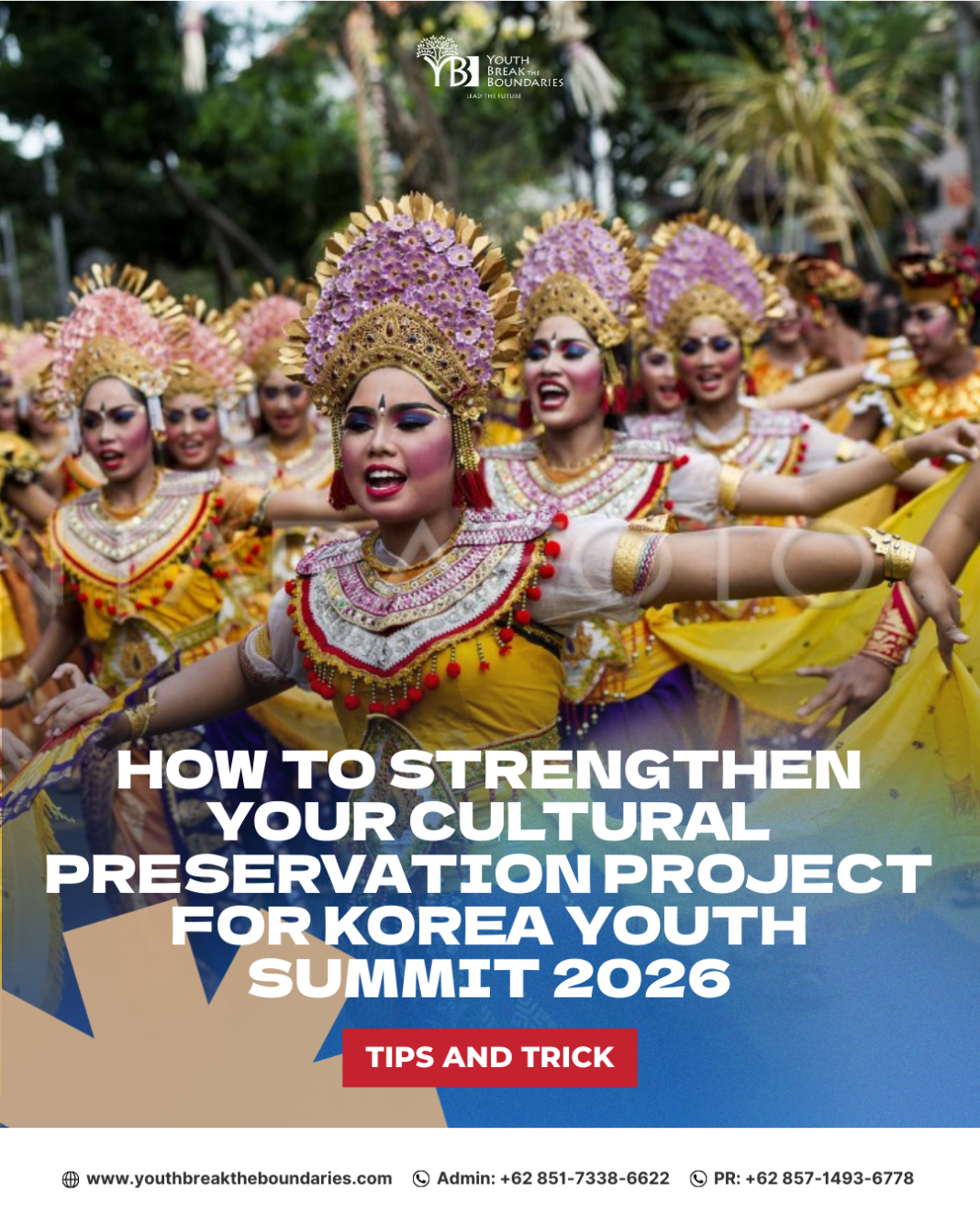

Globalization connects people across the world, but it also creates challenges for protecting traditional heritage. Many local traditions, languages, and cultural practices are slowly disappearing. Because of this, young people now play an important role in protecting cultural identity.
One international platform that encourages youth to contribute to cultural preservation is the Korea Youth Summit 2026, organized by Youth Break the Boundaries. This global program invites young leaders from many countries to present innovative projects that address cultural and social challenges.
One important focus in the program is cultural preservation projects. If you plan to participate, you need more than just a creative concept. Your project should demonstrate real impact, sustainability, and relevance to the community. Strengthening these elements will help your project stand out among participants from around the world!
Understand the Cultural Issue You Want to Protect
The first step in building a strong cultural preservation project is understanding the issue deeply. Cultural preservation is not only about documenting traditions. It also protects values, knowledge, and identity passed from one generation to another.
You should identify a specific cultural element that is at risk, such as traditional dance, indigenous language, traditional food, or local knowledge systems. Conduct research by speaking with community members, cultural practitioners, and elders. A strong understanding of the issue makes your project more credible and meaningful.
Involve the Local Community
Cultural preservation cannot succeed without community participation because culture belongs to the people who practice it. Your project should involve local communities from the beginning.
You can collaborate with local artists, cultural organizations, youth groups, and elders who understand the tradition. Their insights will help you design a project that reflects authentic cultural values. Community participation also ensures that your initiative respects traditions and creates long-term impact.
Use Technology to Support Cultural Preservation
Technology can become a powerful tool for protecting and promoting culture, especially for younger generations. Many youth innovators use digital platforms to document and share cultural heritage with wider audiences.
Your project could create digital archives that store traditional stories, music, or historical records. Mobile applications, virtual exhibitions, and digital storytelling platforms can also help introduce culture to global audiences.
Focus on Education and Cultural Awareness
One major reason traditions disappear is the lack of cultural awareness among younger generations. Many young people grow up without learning about their own heritage.
Your project can address this issue by developing educational activities such as workshops, school collaborations, or cultural learning modules. Cultural festivals, storytelling programs, and interactive exhibitions can also help young people reconnect with their traditions. Education strengthens cultural pride and ensures traditions continue to live in future generations.
Create Economic Opportunities Through Culture
Cultural preservation becomes more sustainable when it also supports community livelihoods. If people gain economic benefits from cultural activities, they are more motivated to maintain their traditions.
Your project could support artisans, performers, or cultural entrepreneurs by promoting traditional crafts or cultural tourism. You could also develop training programs that help artisans adapt their products to modern markets while maintaining authenticity.
Build Partnerships and Collaboration
Strong cultural projects rarely succeed without collaboration. Partnerships allow you to access knowledge, resources, and wider networks that support your project.
You can collaborate with cultural institutions, universities, NGOs, or local government programs. International youth collaboration can also bring fresh perspectives to cultural preservation efforts. Through cooperation, your project gains credibility and stronger potential for long-term growth.
Measure and Present Your Project Impact
A successful cultural preservation project should show clear and measurable impact. In global programs, judges often evaluate how effectively a project benefits communities and protects heritage.
You can define impact through indicators such as the number of workshops conducted, participants involved, or cultural materials documented. Community feedback through interviews or surveys can also show whether your initiative truly helps preserve culture.
Why Youth Innovation Matters in Cultural Preservation
Culture shapes identity, values, and community connections. When traditions disappear, societies lose important knowledge that has been passed down for generations.
Young people have a unique advantage because they understand both traditional culture and modern technology. Programs like the Korea Youth Summit 2026 provide a platform where youth can transform creative ideas into real cultural initiatives while collaborating with peers from different countries.
Conclusion
Strengthening a cultural preservation project requires more than creativity. Your idea needs strong research, community participation, innovative approaches, and measurable impact.
By combining cultural knowledge with education, technology, and economic opportunities, your project can become more sustainable and meaningful.
Participating in Korea Youth Summit 2026 allows you to share your cultural preservation initiative with a global audience of young leaders. With thoughtful preparation and genuine commitment, your project can inspire others to protect cultural heritage and ensure traditions continue for future generations.