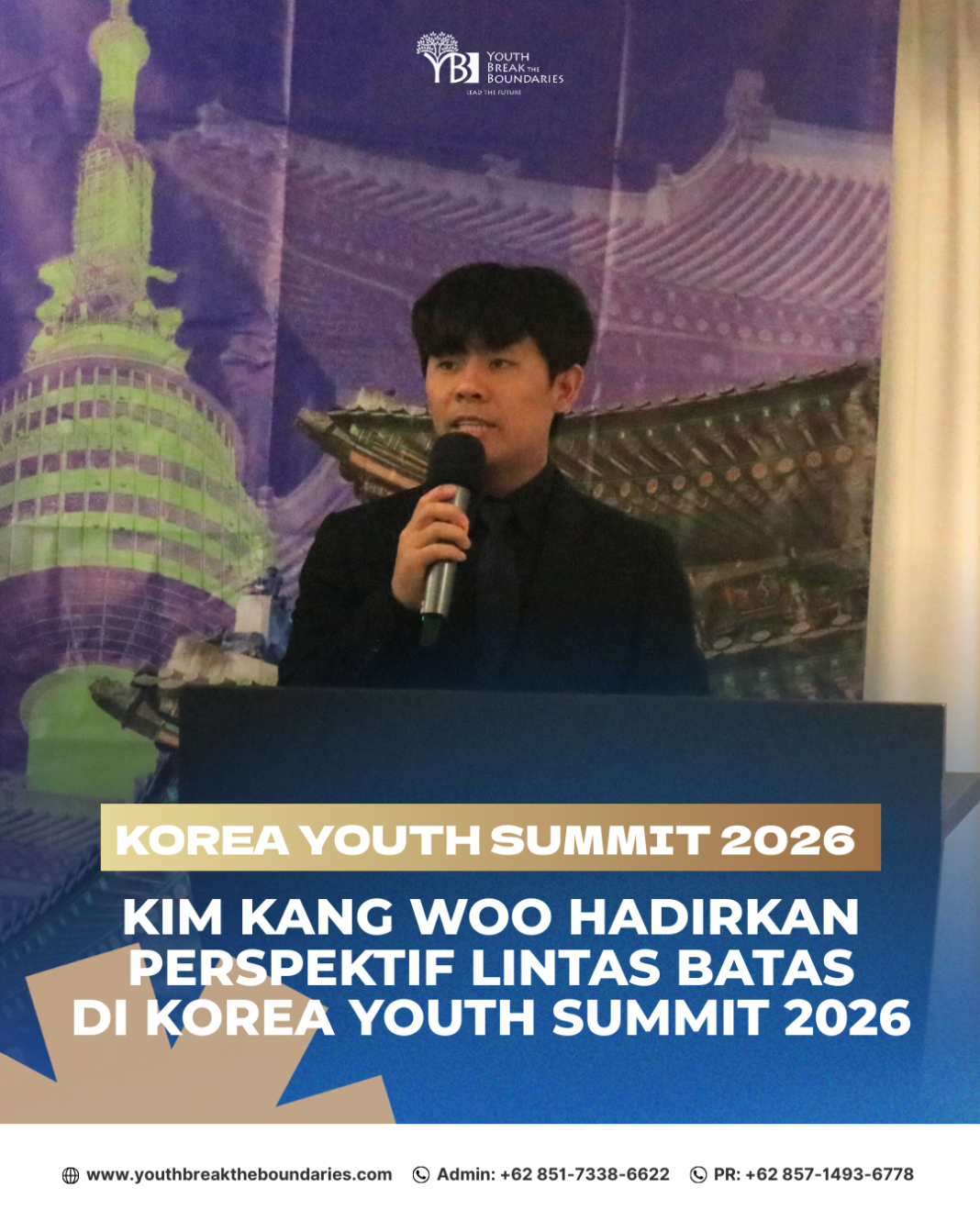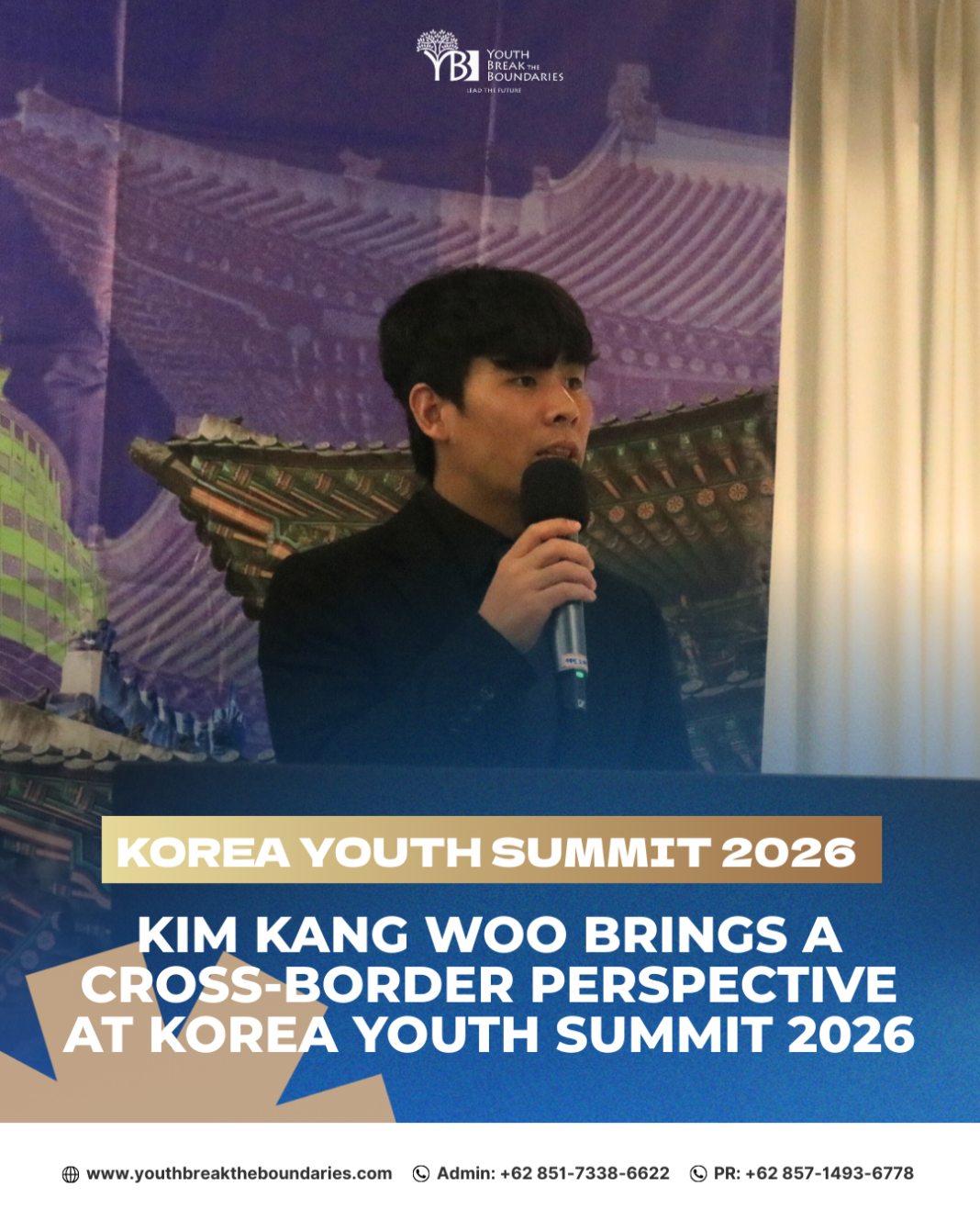

Seoul, South Korea — Korea Youth Summit 2026, organized by Youth Break the Boundaries, successfully brought together hundreds of young delegates from various countries. The summit served as a platform to build cross-cultural collaboration, discuss global issues, and expand future networks. One of the most highlighted panel discussions was “Beyond the Border,” featuring Kim Kang Woo, a prominent voice in discussions on Korean unification.
This session invited participants to understand the Korean border issue in a broader way. The discussion went beyond geopolitics and explored lived experiences, social realities, and humanitarian challenges faced by young people growing up under two very different systems.
Academic Journey and Contributions to the Unification Discourse
Kim Kang Woo is currently a student of Political Science and International Relations at Kookmin University. He graduated from Songbong High School in Hyesan City, North Korea, before beginning a cross-border journey that eventually led him to continue his education in South Korea.
Beyond academics, Kim is actively involved in strategic roles. He serves as President of the Freedom Club at Kookmin University and as Director of the Envision Foundation.
Beyond the Border: Understanding Two Koreas in One Narrative
During the “Beyond the Border” session, Kim explained the fundamental differences between North and South Korea through political, economic, and socio-cultural frameworks. North Korea was described as a one-party state with a centrally planned economy and a closed social environment. In contrast, South Korea operates under a democratic system with a market-based economy and open society.
These systemic differences provide a foundation for understanding how state policies directly affect quality of life, access to information, and individual freedom.
Also read: Korea Youth Summit 2026: Empowering Global Youth through Dialogue, Culture, and Collaboration
Daily Life Realities and Humanitarian Challenges
In a factual and educational presentation, Kim highlighted three key aspects of daily life in North Korea.
- Education: prioritizes loyalty to leadership, often placing ideological glorification above academic development.
- Healthcare: exists structurally but lacks functionality, with hospitals facing shortages of medicine and equipment.
- Food supply: remains chronically scarce and is a constant part of everyday life.
In this context, practices such as ideological mass rallies were explained as tools for shaping collective awareness, which strongly influence how young people think and perceive the world.
Defection, Youth Voices, and the Role of the Global Community
The discussion continued with the reality of defection, including reasons for leaving North Korea, the high-risk journeys across borders, and the challenges of adapting to life in South Korea. Kim emphasized that young people from both Koreas belong to the same generation, yet grow up in vastly different realities, particularly in terms of freedom, opportunities, and communication.
Toward the end of the session, the Director of Envision Foundation encouraged participants to reflect on the role of the international community in addressing North Korean issues. He also opened a dialogue on peace and the future possibility of Korean unification, highlighting the importance of empathy, open dialogue, and active engagement from global youth.
Also read: Meet the Winners of Korea Youth Summit 2026: Full Awards List!
Conclusion
Through the “Beyond the Border” session, Korea Youth Summit 2026 created a meaningful space for reflection for young people worldwide. Kim Kang Woo not only shared his personal experiences but also invited you to view border issues as a shared humanitarian concern. This session reinforced the role of Youth Break the Boundaries in shaping critical, empathetic, and globally minded youth who are ready to contribute to lasting peace.